

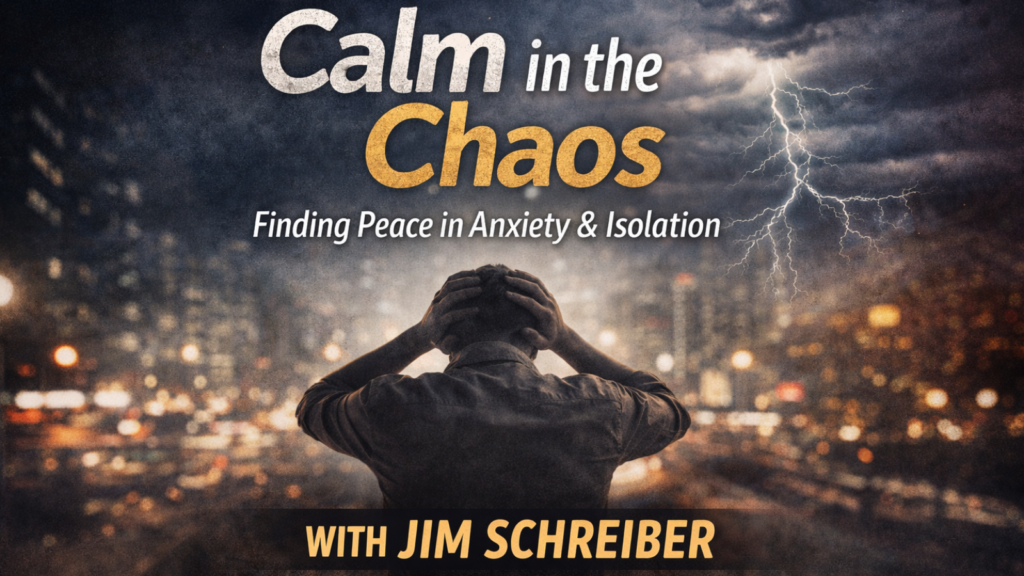
Calm in the Chaos: How to Manage Anxiety, Isolation, and Mental Health in Real Life
Anxiety does not always show up the way people expect.
Sometimes it is not panic attacks. Sometimes it is not obvious. Sometimes it is subtle, constant, and quietly taking over your life.
It looks like not sleeping. It looks like your heart racing for no reason. It looks like isolating yourself, avoiding situations, or feeling like something is off but not knowing what.
And for a lot of people, it starts without warning.
In this episode of Overcome with Travis White, Jim Schreiber shares his experience with anxiety after a life-altering health event, along with practical tools that helped him regain control.
This conversation is not about perfect solutions. It is about real experiences, awareness, and learning how to navigate mental health when life feels overwhelming.
When Anxiety Shows Up Without Warning
For more anxiety recovery stories and practical support, visit the Anxiety and Depression Recovery hub.
For Jim, anxiety did not start as something obvious. It built over time.
After moving to New York City, he noticed stress and pressure increasing, but it was not until COVID that everything escalated. Being isolated, dealing with uncertainty, and eventually ending up in the ICU created a situation that most people are not prepared for.
What followed was something many people experience but do not recognize.
After leaving the hospital, he was told that people who go through isolation and intensive care often develop anxiety. At the time, it felt like the least important thing to focus on.
He was trying to physically recover. Trying to breathe normally again. Trying to get back to functioning.
But anxiety does not wait until you are ready to deal with it.
It shows up anyway.
The Problem Most People Miss
One of the biggest challenges with anxiety is not just experiencing it. It is recognizing it.
As Jim shared, it took weeks of working with professionals before he even realized what he was dealing with was anxiety.
Not sleeping felt normal.
Racing thoughts felt normal.
Constant tension felt normal.
And that is the problem.
When something becomes your normal, you stop questioning it.
That is why awareness is so important. You cannot change something you do not recognize.
Why Isolation Makes Everything Worse
If there is one theme that stands out in this conversation, it is this:
Isolation makes everything worse.
You can handle stress. You can handle hard situations. But when you feel like you are going through it alone, everything becomes heavier.
Jim talked about how isolation during COVID, combined with being in the ICU, created the perfect environment for anxiety to grow.
This is something many people experience without realizing it.
When you are struggling, your instinct is often to pull back. To isolate. To deal with it on your own.
But that is exactly what fuels the problem.
Anxiety grows in silence.
It grows when you do not talk about it. It grows when you keep everything inside.
Breaking isolation is one of the most important steps you can take.
The First Step Is Talking to Someone
One of the most powerful pieces of advice from this conversation is simple:
Talk to someone.
It does not have to be a therapist right away. It could be a friend. A family member. Even just saying things out loud to yourself.
The act of expressing what you are feeling creates relief.
When you keep everything inside, it builds. It gets louder. It becomes harder to manage.
But when you speak it, even just a little, you begin to release that pressure.
You are not crazy for feeling what you feel.
You are human.
Why Awareness Changes Everything
One of the most important moments in the conversation is when Travis shares a key insight:
Awareness is half the battle.
Once you start recognizing your triggers, your patterns, and your responses, you gain control.
Before that, everything feels automatic.
You react without thinking. You spiral without realizing it. You feel stuck.
But awareness creates space.
It allows you to pause.
It allows you to choose a different response.
It allows you to say, “This is anxiety. This is not me.”
Simple Techniques That Actually Help
One of the most valuable parts of this episode is the practical tools that were shared.
1. Meditation
Jim found that even 10 to 15 minutes of meditation made a noticeable difference.
It helped slow his mind, regulate his breathing, and create a sense of calm.
It did not have to be perfect. It just had to be consistent.
2. Breathwork
Breathing exercises are one of the fastest ways to calm your body.
When your breathing slows down, your nervous system follows.
This creates a direct pathway to reducing anxiety.
3. Grounding Techniques
Travis shared the five senses method as a way to pull yourself out of anxious moments.
By focusing on what you can see, touch, hear, smell, and taste, you bring yourself back to the present moment.
This helps break the cycle of anxious thinking.
4. Body Scanning
This technique involves slowly relaxing each part of your body, starting from your head and moving down.
It helps release tension you may not even realize you are holding.
For many people, this can significantly improve sleep.
The Reality of Finding Help
One challenge that many people face is finding the right therapist.
It is not always easy. It takes time. It can be frustrating.
You may not connect with the first person you talk to.
That is normal.
The important thing is not to give up.
Getting help is worth it.
And as discussed in the episode, even insurance companies recognize that addressing mental health early can prevent bigger problems later.
Your Body and Mental Health Are Connected
For more conversations about mental health and recovery, explore the Mental Health hub.
Another important part of this conversation is the connection between physical health and mental health.
Your body and your mind are not separate.
What you eat, how you hydrate, how you sleep, and how your body functions all impact your mental state.
Jim’s journey into understanding minerals, hydration, and overall health came from trying to feel better physically.
And that physical improvement translated into mental clarity.
This is something many people overlook.
You cannot ignore your body and expect your mind to function at its best.
Comfort Behaviors and Coping Mechanisms
When anxiety hits, people often turn to comfort behaviors.
Late-night eating. Excess caffeine. Comfort foods. Distraction.
These are not random.
They are attempts to regulate your state.
They may help temporarily, but they do not solve the underlying issue.
Recognizing these patterns is another step toward awareness.
Once you see them, you can begin replacing them with healthier tools.
You Are Not Alone in This
If there is one message to take from this conversation, it is this:
You are not alone.
Mental health struggles are far more common than people talk about.
Even within families, many people are dealing with similar challenges without realizing it.
The moment you open up, you often find that others understand more than you expected.
That connection matters.
It is part of the healing process.
There Is Light at the End of the Tunnel
There will be hard days.
There will be moments where it feels overwhelming.
But those moments do not last forever.
As Jim shared, there is always another day. There is always an opportunity for things to improve.
Even when it feels dark, it will not stay that way.
Progress does not happen all at once.
It happens through small steps.
Awareness. Conversations. Simple techniques. Support.
Those things add up.
And over time, they create real change.