

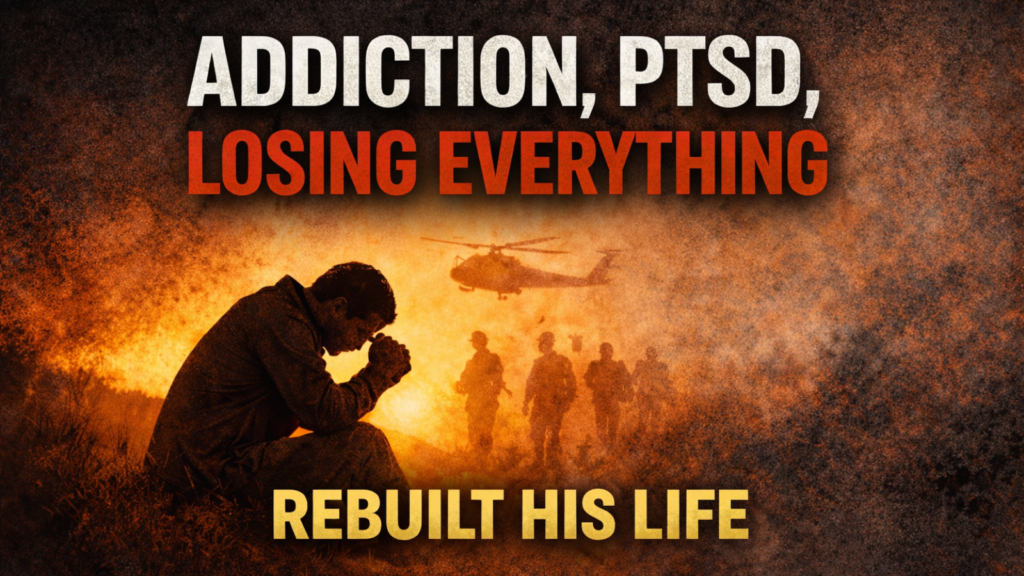
Addiction PTSD Losing Everything: Ryan Reichert Rebuilt After Rock Bottom
Listen to the full episode
If Ryan Reichert’s story hits close to home, hear the full conversation with Travis White on the original episode page.
For many people, addiction PTSD losing everything is not one single crisis. It is a chain reaction that takes over piece by piece until life no longer feels like your own.
You are tired all the time. You are hiding more than you want to admit. The people around you know something is wrong, but maybe they do not know how bad it has become. If you feel like you have lost control, Ryan Reichert’s story speaks directly to that place.
His story is not clean or comfortable. It is about identity pressure, sports injury, prescription drug abuse, military trauma, PTSD, addiction, divorce, career loss, and the slow collapse of the life he thought he had built. It is also about what can happen after a person hits rock bottom and decides to tell the truth.
In this episode of Overcome with Travis White, Ryan walks through what it felt like to lose family, stability, confidence, and his sense of self. Then he shares what came next. Sobriety. Spiritual renewal. Honest recovery. Service. A new purpose that grew out of the wreckage.
This is why the conversation matters. It is not a polished success story. It is a real look at addiction, PTSD, and losing everything, and what it takes to rebuild life after collapse.
Addiction PTSD losing everything can happen slowly
For more addiction recovery stories about rock bottom, trauma, sobriety, and rebuilding, visit the Addiction Recovery hub.
Ryan did not start out looking like someone headed for disaster. He grew up in a small North Dakota town where identity came with pressure from the start. He felt different early on, and that difference fed a deep need to prove himself. Sports became the vehicle. Performance became protection. Success became a way to feel secure.
That kind of identity can work for a while, until the thing holding you together gets ripped away.
As a teenager, Ryan tore his ACL and went through multiple surgeries. In the transcript, he describes that stretch as the beginning of his mental health journey from the ditch, the valley. Recovery brought pain medication into the picture, and what started as treatment opened the door to prescription drug abuse. Even after fighting back physically and returning to sports, the deeper loss stayed with him. He was not just recovering from an injury. He was grieving the future he thought he would have.
That is a pattern a lot of people miss. Addiction often grows in the same soil as disappointment, unresolved pain, identity loss, and silent shame. The substance becomes a way to numb the story before the person has words for what is happening inside them.
The pressure to succeed can hide pain for years
Ryan had wanted West Point, and the injury changed that path. Without that dream, he ended up in college carrying frustration, instability, and a growing sense that life had already gone off course. Drinking and legal trouble followed, and the behavior was already pointing to pain that had not been faced.
The Army gave him structure, direction, and a mission. He served for 23 years, including combat deployments in the Middle East. From the outside, that kind of life can look disciplined and admirable. On the inside, it can also become a way to outrun what is still broken.
Ryan speaks openly in the episode about the culture of grinding hard and then numbing hard. Trauma stacked up. Alcohol became a crutch. Midway through his military career, he ruptured his Achilles and was prescribed OxyContin. In his own words, he liked what it did, and he abused it. He even admitted using his rank to get more.
That honesty is what gives the story real weight. He is not trying to rescue his image. He is naming what happened. For people living inside addiction PTSD losing everything, that kind of honesty can become the first real break in denial.
What we discussed
Travis and Ryan do more than revisit painful memories in this conversation. They trace the whole pattern. They talk about the early identity struggles that made achievement feel necessary for worth. They unpack how injuries and prescription drugs opened the first dangerous door. They talk about military service, trauma, and the ways PTSD and addiction can feed each other when the pain stays unspoken.
The episode also spends time on the losses that come with collapse. Ryan shares what it meant to lose his marriage, his connection with his children, his corporate job, and the version of himself he had been trying to preserve for years. The episode page points to a key turning point too: his decision to get sober and attend his first AA meeting. That moment mattered because it marked the start of surrender, not just self-improvement.
The conversation ultimately turns toward rebuilding. Ryan talks about spirituality, purpose, and the need to speak honestly about suffering, pain, and trauma. Instead of pretending the past never happened, he chose to let it become part of how he now helps other people move forward.
Rock bottom looked like losing family, career, and self
Ryan’s story also connects with this conversation on addiction recovery and finding purpose after rock bottom.
One of the hardest parts of Ryan’s story is that sobriety did not immediately restore everything addiction had damaged. He explains that after getting sober, the separation, divorce, estrangement from his children, and job loss still followed. That is a painful truth, but it is an important one.
Sometimes sobriety begins in the middle of fallout. It does not instantly repair trust. It does not erase the financial damage or the emotional wreckage. It does not reverse consequences that were already in motion. Recovery often starts while the life you knew is still actively falling apart.
Ryan also describes the physical and emotional collapse that followed retirement. He gained weight, stopped taking care of himself, drank every day, and found himself in what he called a deep dark valley. That phrase lands because it names something many people feel but struggle to explain. It is more than sadness. It is the slow erosion of identity, energy, routine, and hope.
If your life no longer looks like the one you worked so hard to build, this part of the story matters. Rock bottom is not always loud. Sometimes it looks like isolation, shame, and the private realization that you are no longer in control.
Sobriety opened the door to rebuilding life after collapse
For a related recovery story, read how Nathan Buttigieg began rebuilding life after addiction.
Ryan’s story becomes powerful because he stopped pretending the pain had not happened. In sobriety, he says his spirituality was reborn. His drive came back. His purpose returned. None of that happened because everything was suddenly fixed. It happened because he started building from truth instead of image.
That is one of the strongest lessons in this episode. Rebuilding your life after addiction, trauma, and loss is not about recreating the old version of yourself. It is about becoming honest enough to build something stronger and more real.
Today Ryan speaks, coaches, and pours into people who feel overwhelmed, stuck, or trapped in the same kind of internal battle he once hid. He talks at schools, events, and organizations because he wants people to understand that mental health gets better when we stop avoiding our suffering and start talking about it honestly.
That message fits the heart of Overcome’s mission and the larger conversations happening across the Overcome podcast. Healing often starts when someone tells the truth out loud and another person realizes they are not alone.
Faith, purpose, and helping others changed the direction of his life
There is a difference between quitting a substance and actually finding a reason to live differently. Ryan’s story shows both.
His recovery is deeply tied to spirituality, service, and rediscovering purpose. That does not make the story abstract. It makes it grounded. He found something bigger than the cycle that had been consuming him. He found a reason to stop living for escape and start living for impact.
For some people, the next step may involve AA, therapy, faith, community, coaching, or a mix of all of them. For others, it may begin with one honest conversation and the willingness to stop hiding. The path can look different, but the foundation tends to be the same. Rebuilding usually requires support, humility, and a life built on something deeper than self-protection.
Ryan’s life now points outward. He helps other people break limiting beliefs, face what hurts, and move toward meaningful transformation. That does not erase his past. It gives it purpose.
Learn more
If you want to go deeper into Ryan Reichert’s work and the resources shared on the episode page, start here:
- Our Protector Development
- Ryan Reichert on Instagram
- Ryan Reichert on LinkedIn
- Overcome Mental Health on Etsy
Rebuilding is still possible
If alcohol has become part of the collapse, this story about how alcohol can take control before change begins may help readers see another path forward.
A lot of people believe they have crossed a line they cannot come back from. Too much shame. Too much damage. Too many broken relationships. Too many years lost.
Ryan Reichert’s story says otherwise.
Addiction, PTSD, and losing everything can push a person to the edge. Trauma can distort identity. Prescription drugs and alcohol can feel like relief while they quietly destroy what matters most. Rock bottom can strip away family, career, confidence, and peace. But even there, rebuilding is still possible.
Not easy. Not quick. But possible.
If you are fighting that battle right now, let this story remind you that your lowest point does not have to become your final identity. Sobriety is possible. Healing is possible. Purpose is possible. And rebuilding your life after collapse is still on the table, even if today feels like the aftermath.
Listen to the full Ryan Reichert episode
Rebuilding Life After Addiction, PTSD, and Rock Bottom
Quick answer: Rebuilding after addiction and PTSD usually requires more than willpower. It takes honesty, support, safer routines, trauma-aware care, and a reason to keep choosing recovery when shame says it is too late.
Ryan Reichert’s story matters because it shows both the cost of losing everything and the possibility of building a new life with faith, purpose, and accountability.
Related Overcome resources
- Addiction recovery stories
- Trauma healing and PTSD recovery
- Breathwork and addiction recovery
- Alcohol recovery after jail forced change
Frequently asked questions
How are PTSD and addiction connected?
Some people use substances or compulsive behaviors to numb trauma symptoms, fear, shame, or memories. Trauma-aware support can be important in recovery.
Can someone rebuild after losing everything to addiction?
Yes, but it often happens one honest step at a time through support, treatment, accountability, changed routines, and repairing trust where possible.
What should someone do first after rock bottom?
The first step is to get safe and tell the truth to someone who can help, such as a trusted person, recovery support, medical professional, therapist, or treatment resource.