

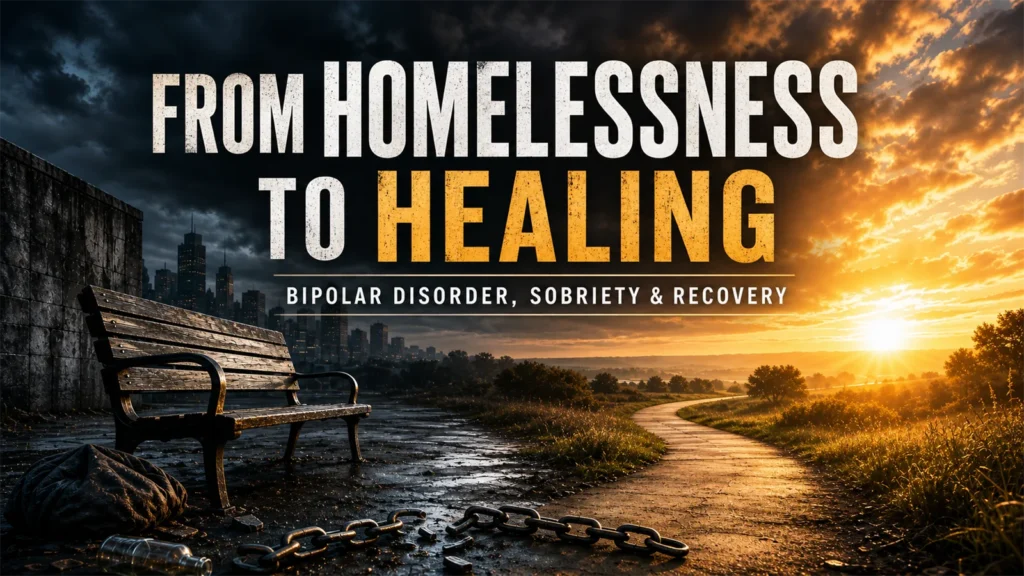
Homeless to Healing: Massimo Rigotti on Bipolar Disorder and Sobriety
Bipolar disorder and sobriety are not abstract ideas in Massimo Rigotti’s story. They are part of a long, painful, and ultimately hopeful path through self-medication, addiction, homelessness, grief, routine, self-awareness, and the daily decision to keep choosing healing.
In this episode of Overcome With Travis White, Travis talks with Massimo Rigotti, founder of The SOBER Method, about what it looked like to live with bipolar disorder, use alcohol and cocaine to cope, hit a breaking point, and rebuild his life with a new kind of structure. The conversation is honest about the damage addiction can do, but it also holds onto the possibility that a person’s worst chapter does not have to be the final one.
When Bipolar Disorder and Addiction Become Entangled
For more stories about sobriety, addiction recovery, and rebuilding after hard seasons, visit the Addiction Recovery hub.
Massimo shares that he was diagnosed with bipolar disorder in college. For more than 20 years, he used alcohol and cocaine as a way to self-medicate. That pattern eventually took a heavy toll and led him into homelessness.
One of the reasons this conversation matters is that it does not flatten addiction into a character issue or reduce bipolar disorder to a label. Massimo talks about pain, coping, instability, and the search for relief. For many people, mental health symptoms and substance use can become tangled together in ways that are difficult to unwind without support, honesty, and a willingness to face what is really happening.
At the same time, this episode is not a treatment plan. Massimo is sharing his lived experience. Anyone navigating bipolar disorder, substance use, medication questions, withdrawal, or safety concerns deserves qualified professional care and support from people who can help them make informed decisions.
The Turning Point That Changed His Direction
Massimo describes a life-changing encounter and a tragic loss that pushed him toward a different path. Those moments did not erase the past, but they helped him see that continuing the same way was no longer an option.
Recovery often begins with that kind of honest reckoning. It may be quiet. It may be painful. It may come after a crisis. For Massimo, the choice to get sober became connected to grief, responsibility, and the desire to become someone who could live with more intention.
The episode keeps that transformation grounded. Healing was not presented as instant or effortless. It was long-term, built through choices, routines, reflection, and a willingness to understand his triggers instead of being ruled by them.
Why the Traditional Path Did Not Fit Him
Massimo talks with Travis about why traditional 12-step programs did not work for him in the way he needed. That does not mean 12-step recovery is wrong or unhelpful. Many people find life-saving community and structure there. For Massimo, though, he needed a different framework, and that eventually became The SOBER Method.
The important thread is not that one recovery path works for everyone. It is that people need access to support that they can actually engage with. Recovery may include therapy, recovery meetings, medical care, medication-assisted treatment, spiritual support, peer groups, coaching, lifestyle changes, or a combination of tools. The right next step is personal, and it is worth finding help that fits.
Routine, Wellness, and Mental Stability
Massimo also shares how lifestyle changes like diet, exercise, and routine supported his mental stability. In his story, those habits became part of building a life that was less chaotic and more intentional.
That distinction matters. Movement, nutrition, sleep, and structure can be meaningful tools for some people, but they are not a substitute for professional care when someone needs it. They are part of Massimo’s recovery story, not a blanket promise. The deeper point is that healing often asks a person to become curious about their patterns: what helps, what harms, what triggers a spiral, and what supports steadiness over time.
Turning Triggers Into Information
One of the most practical parts of the episode is Massimo’s focus on identifying personal triggers. Instead of treating triggers as proof of failure, he talks about learning from them. What set this off? What need was underneath it? What can I do differently next time?
That kind of self-awareness can be powerful in recovery because it creates a pause between the feeling and the old response. The pause may be small at first. It may need support. But over time, noticing patterns can help a person build a more honest relationship with themselves.
What We Discussed
- Massimo Rigotti’s diagnosis with bipolar disorder in college
- How alcohol and cocaine became part of self-medication over many years
- The path from addiction and homelessness toward sobriety and healing
- Why traditional 12-step programs did not fit Massimo’s needs
- How The SOBER Method grew out of his lived experience
- The role of diet, exercise, routine, and self-awareness in his recovery
- How grief and loss became part of his motivation to stay sober
- Why identifying triggers can turn old patterns into opportunities for growth
About Massimo Rigotti and The SOBER Method
Massimo Rigotti is the creator of The SOBER Method, a framework he built from his own recovery experience to help people break free from addiction, develop resilience, and live with more intention.
You can learn more about Massimo and The SOBER Method at sobermethod.com. You can also find him on YouTube, Instagram, TikTok, and Reddit.
A Gentle Reminder for Anyone Struggling
If this episode feels close to home, you do not have to sort through bipolar disorder, addiction, sobriety, grief, or trauma recovery alone. Reach out to a qualified mental health professional, addiction recovery provider, physician, trusted support person, or local crisis resource if you are worried about your safety. Asking for help is not a failure. It is one of the ways people stay alive long enough to heal.
Listen to the Full Episode
Massimo’s story is not about pretending recovery is easy. It is about telling the truth: people can lose a lot, face themselves honestly, and still begin again.
Listen to the Full Episode Explore More Episodes
Overcome With Travis White is a mental health podcast built around real conversations about depression, anxiety, trauma, addiction recovery, resilience, identity, faith, and rebuilding life after hard seasons.
- Read next: Managing Bipolar Disorder: Steve Wilson’s Path to Recovery and Support
- Listen next: Steve Wilson on managing bipolar disorder
- Read next: stoicism, mental health, and leadership
- Explore mental health resources from Overcome
- Explore addiction recovery resources from Overcome
- Learn more about Travis White and Overcome