

Losing Trust After Trauma: When One Moment Changes Everything

Trust is strange because it can feel so solid until it does not.
You can build it through thousands of small moments. A familiar voice. A repeated promise. A safe routine. A person, place, or relationship that has always felt steady. Then one event happens and the ground underneath you changes. What used to feel safe suddenly feels uncertain. What used to feel automatic now makes your body tense.
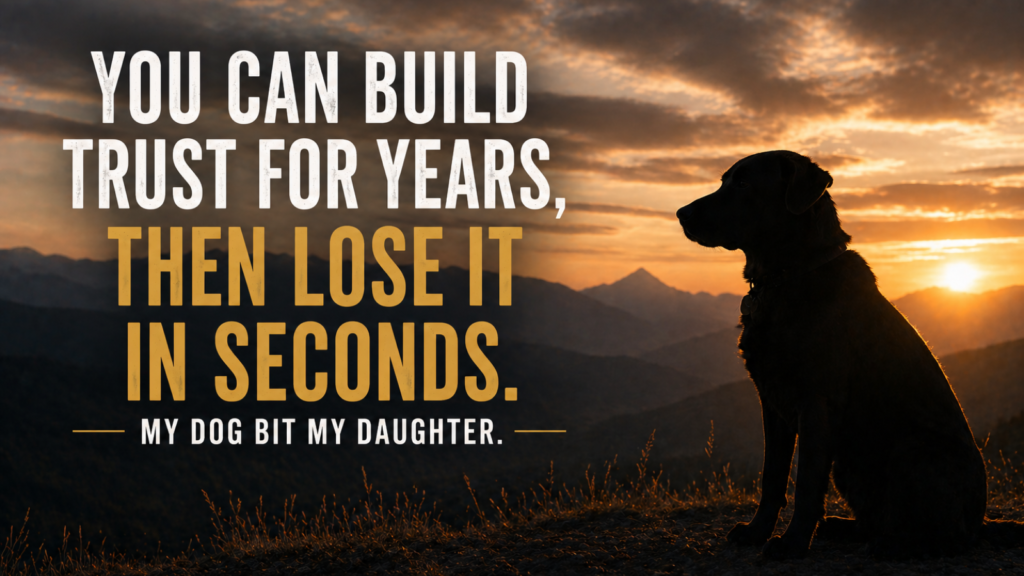
That is what this episode of Overcome With Travis White is about. Travis shares the deeply personal story of the moment his family dog bit his daughter, and how that single incident shattered years of trust in seconds.
This is not only a story about a dog bite. It is about losing trust after trauma, the fear that follows, and the difficult emotional work of asking, “Can I ever feel safe again?”
When Trust Breaks in Seconds
Most of us understand that trust takes time. We know it is built slowly. It grows through consistency, reliability, love, and repeated experiences that teach us we can let our guard down.
But when trust breaks, it rarely breaks slowly.
Sometimes it breaks in one sentence. One betrayal. One phone call. One diagnosis. One accident. One moment when something or someone you counted on suddenly becomes connected to pain.
That is what makes trauma so disorienting. Your mind is not only reacting to what happened. It is also trying to rewrite the rules for what is safe now. The same room feels different. The same person feels different. The same routine feels different. You may still love what hurt you, but love no longer removes the fear.
After a traumatic moment, people often feel fear, confusion, guilt, anger, and grief all at once. You can find yourself replaying the event over and over. What did I miss? Could I have stopped it? Should I have known? Why did this happen now?
Losing trust after trauma can make you question your own judgment as much as the event itself. That is part of the pain. It is not just, “I do not trust this anymore.” Sometimes it becomes, “I do not trust myself to know what is safe.”
The Story: When Everything Changed
In this episode, Travis starts at the beginning.
Before the bite, Simba was not just a dog in the house. He was part of the family. Travis talks about meeting him as a puppy, bringing him home, and how that responsibility gave him something meaningful to focus on during a hard season of anxiety, depression, seizures, and emotional instability.
Simba became companionship. He became routine. He became a constant. There was training, work, patience, and the slow building of trust. Like many pets, he was woven into the emotional life of the home.
Then Travis became a dad.
That is where the story gains another layer. When a child enters the picture, the stakes change. The dog that once represented comfort is now sharing space with someone small, vulnerable, and completely dependent on the adults around her. Travis describes the relationship between Simba and his daughter, the normal family rhythms, and the kind of trust that can form when an animal has been with you for years.
Then the bite happened.
That moment did not only create physical fear. It created emotional rupture. A dog Travis loved had hurt his child. The mind does not file that neatly. It creates conflict. It creates shock. It forces a parent to stand between attachment and protection, between history and what just happened, between love for a pet and responsibility for a child.
That is why the story lands so heavily. It is not about blaming. It is about the way one moment can split your life into before and after.
What Losing Trust Feels Like
Losing trust after trauma often feels like living with two truths that do not know how to sit together.
You can still love someone and feel afraid of them.
You can miss what used to be and still know something has changed.
You can want things to go back to normal and also feel your body refuse to relax.
That conflict can be exhausting. In this story, it shows up as fear versus love. Protection versus attachment. The memory of years of companionship versus the reality of a bite that cannot be unseen.
Many people experience this in other parts of life too. A spouse betrays trust and every conversation afterward feels loaded. A business partner makes one decision that changes the entire relationship. A friend shares something private and suddenly vulnerability feels dangerous. A parent loses confidence in their own ability to protect their child. A person has a panic attack in a place they used to enjoy and starts avoiding it altogether.
Trust is not only about other people. It is also about the way we move through the world. When trauma hits, it can make us question our instincts, our memory, our judgment, and our ability to choose well.
That is why the emotional impact can feel bigger than the event itself. The event ends. The questions remain.
The Reality of Trauma and Trust
Trauma changes the way we interpret safety.
You do not need a clinical label to understand that. After something frightening happens, your brain starts scanning for danger more aggressively. It looks for warning signs. It remembers details. It may react faster than you expect, even when you are trying to stay calm.
That response can be protective, but it can also be exhausting. A person may become more anxious, more guarded, more reactive, or more controlling after a traumatic event. They may avoid situations that remind them of what happened. They may feel guilty for being scared. They may feel embarrassed that they cannot simply “get over it.”
Children and adults can both carry emotional effects after events like dog bites. A child may not have the words to explain why they feel nervous. An adult may feel the pressure to manage everyone else’s emotions while quietly carrying their own. Parents can carry a special kind of guilt because they often wonder if they should have prevented the moment somehow.
That is one reason stories like this matter. They give language to experiences people often keep private.
If you have been through something that changed your sense of safety, your reaction is not weakness. It is your system trying to protect you after something painful happened.
Rebuilding Trust After It Is Broken
The hopeful part is this: broken trust does not have to mean the end of healing.
But rebuilding trust is a process. It is not instant. It is not forced by pretending everything is fine. It does not happen because someone says, “You should be over it by now.” Trust rebuilds through repeated evidence, honest reflection, and choices that create safety again.
Sometimes rebuilding starts with time and space. You may need distance from the situation so your nervous system can settle. That space is not always punishment. Sometimes it is protection.
It also requires honest reflection. What changed? What needs to be acknowledged? What boundaries are necessary now? What would make the situation safer going forward? Avoiding those questions usually delays healing.
Boundaries matter because they turn fear into action. A boundary says, “This is what I need in order to feel safe enough to move forward.” It might mean new rules, new routines, supervised exposure, professional support, or a clear decision that something cannot return to the way it was.
Gradual exposure can also be part of rebuilding trust, but only when it is wise and safe. That means small steps, not pressure. A person may need to be near what scares them from a distance before they can engage more closely. They may need repeated calm experiences before the body begins to believe the danger has passed.
Communication is the thread through all of it. Healing needs honesty. Families need space to talk about fear without being shamed. Children need reassurance. Adults need permission to admit that they are struggling too.
For more conversations about resilience, healing, and rebuilding after hard moments, you can explore the Overcome homepage and listen to other stories from the show.
How This Connects to the FAITH Framework
The FAITH Framework gives a practical way to think about moments like this because it does not ask you to pretend the pain is simple.
Foundation is about finding stability after chaos. When trust breaks, the first need is not a perfect answer. It is steadiness. What is safe right now? What needs to be protected? What routines can help everyone breathe again?
Attitude is about shifting perspective after fear. That does not mean denying fear. It means noticing when fear is trying to run the entire story and asking what else is true. There can be danger, love, grief, responsibility, and hope in the same room.
Integrity is about being honest about what changed. In this episode, the hard truth is that Simba was loved, but the bite changed the relationship. Integrity refuses to minimize the event just because the history was meaningful.
Trust is about rebuilding slowly. Not blindly. Not by ignoring what happened. Real trust grows through consistent evidence over time.
Humility is about accepting that we do not control everything. That is one of the hardest parts of parenting, relationships, and life in general. We can be careful and still be surprised. We can love deeply and still face situations we never wanted.
You can learn more about this approach on the FAITH Framework page.
You Are Not Alone in This
If this episode hits close to home, take a breath.
Maybe your story is not about a dog bite. Maybe it is about a relationship. A friendship. A workplace. A medical event. A moment with your child. A decision you wish you could undo. Maybe you are still carrying fear, guilt, confusion, or anger from something that happened quickly but changed everything afterward.
You are not alone in that.
It is normal to grieve the version of life that existed before the rupture. It is normal to miss how simple trust used to feel. It is normal to feel frustrated that your body reacts before your mind can explain why.
Setbacks do not define you. Fear does not mean you are failing. Guilt does not mean you are a bad parent, partner, friend, or person. It means something mattered, something hurt, and now you are trying to understand how to move forward.
That is part of overcoming. Not skipping the hard truth. Facing it with enough honesty to begin again.
Final Takeaway
Trust can be rebuilt, but it starts with awareness and action.
Awareness says, “Something changed, and I need to be honest about it.” Action says, “I can take the next wise step even if I do not feel fully safe yet.” Together, they create a path forward.
Losing trust after trauma is painful because it touches the deepest part of how we survive. We need safety. We need connection. We need to believe that the people, places, and relationships around us can be trusted. When that belief is shaken, healing takes patience.
But broken trust does not mean you are broken. It means a wound needs attention. It means fear needs language. It means boundaries, time, communication, and courage may be required.
Listen to the full episode here: You Can Build Trust for Years, Then Lose It in Seconds: My Dog Bit My Daughter.
What We Discussed
- Losing trust in an instant
- The emotional impact of trauma
- Navigating fear after a crisis
- Rebuilding trust step by step
- Applying the FAITH Framework in real life
If this conversation resonates with you, you may also find encouragement in Travis White’s story about seizures, fear, and taking his life back, or in this article on rewriting your story after heartbreak.
Explore more lived-experience stories and practical resources in the Trauma Healing and PTSD Recovery hub.