

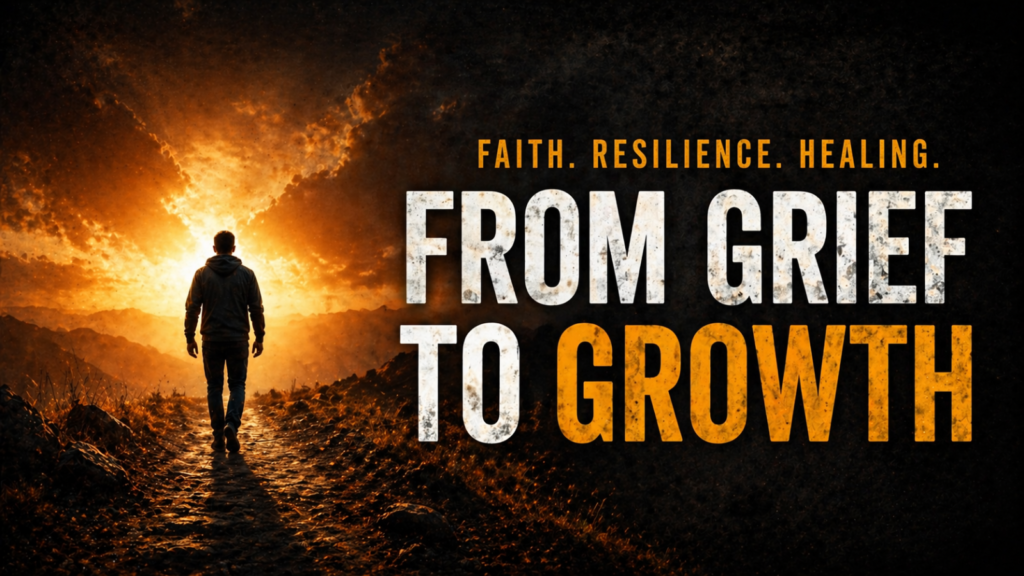
If grief has changed the way you see yourself, you are not broken. You are carrying something heavy.
Loss can make life feel smaller. It can steal your energy, shake your faith, and make the future feel like a room with no door. Maybe you lost someone you loved. Maybe you lost a version of yourself. Maybe you are still functioning on the outside while quietly wondering how to move forward when so much has been taken.
That is why Dr. Oluwole Babatunde’s story matters. On Overcome With Travis White, Dr. Babatunde shared how losing both parents at a young age shaped his life, his faith, his medical work, and his mission. His message is not shallow positivity. It is a grounded reminder that grief can shape your identity, but it does not have to define your future.
This conversation is about faith resilience and healing in the real world. It is about rebuilding when pain is still part of the story. It is about using faith, science, daily habits, and purpose to take the next step when the next step feels impossible.
The Reality of Grief and Losing Everything
When grief turns into silence or pressure to stay strong, this companion conversation on why men stay silent in grief goes deeper into what can happen when pain has nowhere to go.
Dr. Babatunde grew up in Nigeria and experienced the kind of loss that can divide a life into before and after. He lost both parents at a young age. That kind of grief does not only create sadness. It can change how a person understands safety, identity, belonging, and the future.
When a child loses the people who were supposed to anchor the world, grief can become part of the internal map. It can raise questions no child should have to answer. Who am I now? Who protects me? What happens to my dreams? Why did this happen?
For many people, grief becomes a silent identity. They learn to survive, but they also learn to expect loss. They become strong because they have to be, but that strength can come with loneliness, fear, and emotional exhaustion.
Dr. Babatunde’s story reminds us that grief is real, but it is not the whole truth about a person. The pain may shape your beginning. It may shape your questions. It may shape your compassion. But it does not have to be the final authority over your future.
Faith Resilience and Healing: Faith and Science Can Work Together
One of the strongest parts of this episode is how naturally Dr. Babatunde brings faith and mental health together. He is a physician and psychiatrist, but he is also honest about the role faith played in helping him survive, rebuild, and find meaning.
For too long, people have been told to choose between faith and psychology. Some are told that prayer should be enough, so they feel ashamed for needing therapy, medication, counseling, or clinical support. Others are told that science has no room for spiritual life, so they hide the faith that gives them strength.
That separation hurts people.
Faith and science can work together. Mental health care can help someone understand trauma, grief, depression, anxiety, and the nervous system. Faith can help someone hold onto hope, meaning, identity, forgiveness, and courage when life feels unbearable.
For Dr. Babatunde, healing is not about pretending pain is spiritual when it is psychological, or pretending suffering is only clinical when it is also deeply personal. It is about bringing the whole person into the healing process: mind, body, spirit, story, habits, and community.
The MAPLAMP Framework Explained
Dr. Babatunde shares a seven-part framework called MAPLAMP. It is a practical way to move from adversity toward growth without ignoring the reality of what happened.
Meaning asks what can be learned from pain without calling the pain good. Meaning does not erase grief. It helps grief become part of a larger story.
Action moves healing out of thought and into motion. When life feels overwhelming, action may be small: making the appointment, taking the walk, having the hard conversation, getting out of bed, or choosing one healthy habit today.
Planning gives pain a direction. Grief can make the future feel blank. Planning helps rebuild a sense of agency by asking what needs to happen next and what support is needed to get there.
Learning keeps adversity from becoming wasted suffering. It asks what this season is revealing about your needs, your patterns, your relationships, your faith, and your capacity to grow.
Alliance reminds us that healing is not meant to happen alone. The right people matter. Supportive friends, mentors, pastors, therapists, doctors, and honest communities can help carry what isolation makes heavier.
Mission turns survival into service. Pain can deepen compassion and clarify purpose. What you have lived through may become part of how you help someone else keep going.
Prayer anchors the process in relationship with God. It creates space for honesty, surrender, strength, and hope when human effort reaches its limit.
MAPLAMP is powerful because it does not ask people to skip grief. It gives grief structure. It helps a person rebuild life after adversity one meaningful step at a time.
Turning Pain Into Purpose
Overcome is built around a truth that shows up again and again: your hardest chapter does not have to be your last chapter.
That does not mean pain is easy. It does not mean loss was fair. It does not mean you should rush past grief to make other people comfortable. It means that even after deep loss, there can still be direction.
Dr. Babatunde’s life reflects that. The grief he carried did not disappear, but it became connected to purpose. It shaped his desire to help others. It informed the way he thinks about suffering, resilience, mental health, and faith.
That is often how transformation works. You do not wake up one day and suddenly feel grateful for everything that hurt you. Instead, you begin to notice that your pain has given you language, empathy, urgency, and clarity. You begin to see that someone else may need the wisdom you had to earn the hard way.
If you are in the middle of grief right now, purpose may feel far away. That is okay. You do not have to force it. Start with honesty. Start with support. Start with the next right step. Purpose often grows slowly out of repeated acts of courage.
Daily Habits That Build Resilience
For another story about endurance when life will not let up, read about mental strength during cancer and resilience.
Resilience is not only built in dramatic moments. Most of the time, it is built in the quiet choices nobody sees.
Dr. Babatunde talks about morning habits and affirmations because the way you begin the day can shape the way you carry pain. A grounded morning routine does not have to be complicated. It simply needs to remind your mind and body that you are not powerless.
Start with prayer or stillness before the noise of the day takes over. Speak truth over yourself before grief gets the first word. Move your body, even if it is only a short walk. Write down one thing you are grateful for and one thing you are responsible for today.
Affirmations can help when they are honest. Not fake statements that deny reality, but grounded declarations that point you toward life:
- I am grieving, but I am still here.
- This pain is real, but it is not the end of my story.
- I can take one faithful step today.
- I am allowed to ask for help.
- God can meet me in this season, not only after it is over.
Mindset shifts happen through repetition. You build resilience by choosing small acts of faith before you feel strong, by telling the truth before shame takes over, and by practicing hope before your emotions catch up.
You Are Not Done Yet
If grief has convinced you that your life is over, hear this clearly: you are not done yet.
You may be tired. You may be angry. You may be carrying questions that do not have easy answers. You may feel like the version of you that existed before the loss is gone. That pain deserves honesty, not a quick speech.
But pain is not prophecy.
The FAITH framework that guides so much of the Overcome message begins with facing reality. You cannot heal what you keep pretending is fine. But faith does not stop at honesty. It invites action, identity, trust, and hope. It reminds you that the next step still matters, even when the whole road is unclear.
You do not have to rebuild your entire life today. You only have to refuse the lie that nothing can change. Reach out. Pray honestly. Talk to someone safe. Make the appointment. Take the walk. Open the journal. Read the book. Listen to the episode. Do the next faithful thing.
Faith resilience and healing are not abstract ideas. They are practiced in real life, by real people, in real pain. Dr. Babatunde’s story is proof that grief can become growth, not because loss is good, but because God can still bring meaning, strength, and mission out of what tried to break you.
What We Discussed
- Losing both parents and navigating early grief
- How faith helped rebuild identity and purpose
- The MAPLAMP framework for growth
- Why faith and science are both essential for healing
- Daily habits that strengthen mental resilience
- Turning adversity into a meaningful life mission
Learn More
- Book: Adapt and Advance by Dr. Oluwole Babatunde, available on Amazon
- Listen to the full podcast episode
- Visit Overcome With Travis White
- Read next: rebuilding your life through self-awareness and resilience
- Read next: why mental health and physical health cannot be separated
- Read next: how Travis rebuilt after seizures, fear, and identity loss