

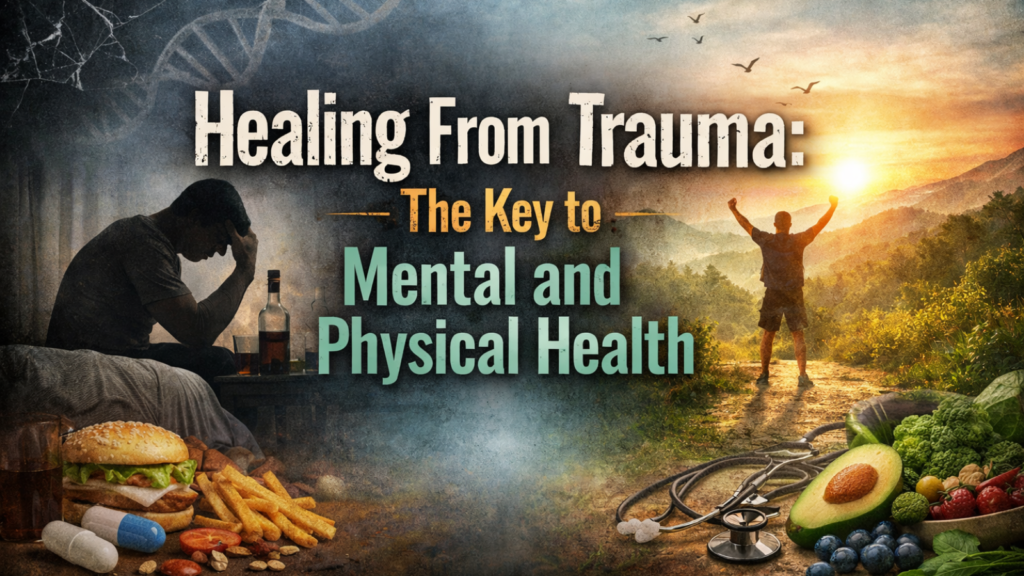
Healing from trauma rarely looks clean or linear. Sometimes it looks like exhaustion, brain fog, anxiety, emotional numbness, or the quiet feeling that something in your life is off even when you cannot explain why.
You’re tired all the time, but sleep doesn’t fix it. Your mind feels foggy. Your body feels heavy. You’re more anxious than usual, more reactive than you want to be, and maybe you’ve started telling yourself this is just what adulthood feels like. Just stress. Just life. Just something to push through.
But what if that’s not true?
On Overcome with Travis White, Dr. Stephan Neff brings a perspective that feels both honest and deeply hopeful. He doesn’t talk about healing like it’s clean or easy. He talks about trauma, survival, coping, denial, nutrition, gut health, and the way modern life quietly wears people down from the inside out. His message is simple, but powerful: mental health is not just about what is happening in your mind. It is also about what is happening in your body, your habits, your nervous system, and the story you keep telling yourself about your pain.
We Are All Carrying Something
One of the most grounding parts of this conversation is how quickly Neff cuts through the illusion that anyone has it all together.
He talks about the pressure people live under now, especially in a world shaped by comparison, social media, nonstop performance, and impossible expectations. Everyone is supposed to be successful, attractive, emotionally strong, financially secure, fully present, and somehow calm through all of it. That kind of pressure does not just sit on the surface. It gets into your body.
Then he asks a question that really lands: what is normal?
That matters, because a lot of people have normalized anxiety, emotional numbness, poor sleep, brain fog, digestive issues, and the constant feeling of being on edge. They have adjusted to surviving. They have started calling dysfunction normal.
Neff’s answer is not shame. It is radical self-compassion.
Not self-pity. Not excuse-making. Self-compassion. The willingness to look at your life honestly and say: this happened to me, this shaped me, and I am allowed to respond with curiosity instead of cruelty. That shift matters. Healing rarely begins when someone is attacking themselves. It begins when they stop running long enough to tell the truth.
From Trauma to Survival to Thriving
For more stories about trauma, PTSD, and rebuilding safety, visit the Trauma Healing hub.
Neff does not speak about trauma from a distance. He shares his own story.
As a teenager, he was violently assaulted at a train station. He was beaten badly, threatened, and left carrying a level of fear no kid should have to carry. He responded the way many people do after trauma: he adapted. He got stronger. He trained obsessively. He built himself into someone who looked powerful from the outside.
But surviving and healing are not the same thing.
For years, he did not fully realize he was living with PTSD symptoms. Even as a trained physician, even as someone who could recognize these struggles in others, he could not clearly see them in himself. That part of the conversation is important because it reveals how common denial really is. Sometimes denial does not look like lying. Sometimes it looks like functioning. Achieving. Staying busy. Reframing pain into strength so well that you never stop to ask what it cost you.
Eventually, Neff did ask. And that recognition changed everything.
He talks about moving from victim to survivor to someone who can actually thrive. Not because the past disappears, but because the past no longer gets the final word.
The Hidden Coping Mechanisms
One of the most honest threads in this episode is Neff’s description of coping.
He speaks openly about how alcohol became a solution for him before it became a problem. It helped him relax. It helped him feel free. It helped him socialize, perform, and escape the weight he was carrying. Later, work served a similar purpose. Achievement gave him structure. Productivity gave him identity. Busyness gave him somewhere to hide.
That is what makes unhealthy coping so deceptive. It often works, at first.
Alcohol can numb. Work can distract. Avoidance can create temporary relief. Scrolling can help you not feel. Overeating can soothe. Perfectionism can make you feel in control. But eventually, the solution starts draining more life than it gives.
Neff’s point is not just that people make bad choices. It is that many people develop coping mechanisms before they develop emotional skills. They learn how to outrun pain before they learn how to sit with it. And if you never learn how to sit with it, you spend years reacting to feelings you do not know how to name.
Healing asks for something harder: presence. Slowness. Honesty. The willingness to stop escaping long enough to feel what is there.
Why Mental Health Isn’t Just Mental
You can also explore broader mental health recovery stories from Overcome.
This is where the conversation gets especially valuable.
Neff makes the case that emotional suffering is not disconnected from physical health. Gut health, inflammation, nutrient deficiencies, sleep quality, blood sugar swings, and toxic load all influence how people feel mentally and emotionally.
He talks about serotonin and the gut, explaining that mental wellness is more complex than a simple chemical imbalance narrative. He also points to blood sugar instability as something that can create a miserable mental state fast. Feed someone a diet full of sugar spikes and crashes, he says, and you can create panic, irritability, anxiety, and emotional instability in a short amount of time.
That does not mean every mental health struggle is caused by food. It means the body matters.
If someone is running on poor sleep, low magnesium, low vitamin D, low zinc, chronic inflammation, and a diet full of ultra-processed food, that person is not starting from neutral. Their nervous system is already under pressure. Their mind is trying to function inside a body that is struggling.
That is why this conversation feels refreshing. It does not pit therapy against nutrition. It does not pit trauma work against medicine. It widens the lens. Healing is not one lane.
The Modern World Is Making Us Sick
Neff is blunt about the environment people are living in now, and honestly, it is hard to argue with him.
Stress is high. Media is overwhelming. Food quality is poor. Many people are undernourished and overfed at the same time. Toxins show up in water, packaging, cosmetics, plastics, and everyday products. He talks about the Standard American Diet and why so many people feel awful without realizing how much their environment is working against them.
He also brings up microplastics, heavy metals, mold, and the cocktail effect of modern toxicity. Maybe one exposure seems small. But life is not lived one exposure at a time. It is layered. That matters.
At the same time, Neff does not spiral into hopelessness. He is not saying people are doomed. He is saying they need to wake up. A lot of people are accepting low energy, poor sleep, mental fog, digestive problems, and chronic inflammation as normal when they are really signs that something needs attention.
Small Changes That Change Everything
Here is where the episode becomes practical.
Neff keeps coming back to basics: fiber, protein, nutrients, hydration, movement, sleep, and removing the things that are making healing harder. That could mean more greens, beans, onions, mushrooms, berries, and seeds. It could mean stabilizing blood sugar. It could mean addressing nutrient deficiencies. It could mean cutting back on alcohol, sugar, and highly processed foods.
None of that sounds flashy, and that is exactly the point.
Functional medicine, at its best, is not about chasing hacks. It is about asking better questions. What is harming you? What is missing? What can be supported? What can be removed? What can be rebuilt?
The answer usually is not one dramatic move. It is a series of small, repeated choices. Better sleep. Better food. More fiber. More awareness. More consistency. Less chaos.
That compound effect is where lives start changing.
Rebuilding Your Life and Healing From Trauma
What makes Neff credible is that he does not talk like someone who found a perfect formula and never struggles.
He talks about divorce, loss, fear, emotional avoidance, and the hard work of learning self-compassion later in life. He describes sitting with fear instead of running from it. He describes learning not to attack himself on days when his mind feels foggy or his energy is not there.
That may be one of the most important messages in this whole conversation: you do not need perfection to heal.
You need honesty. You need some support. You need a willingness to stop abandoning yourself every time you feel weak, tired, scared, or overwhelmed. Healing is not about becoming flawless. It is about becoming more aligned, more aware, and more compassionate with the life you are actually living.
You Can Change Your Future
Near the end of the episode, Neff shares something that feels like the heartbeat of the entire conversation: the past does not equal the future.
That line carries weight because it comes from someone who has lived through trauma, addiction patterns, burnout, and deep reinvention. He talks about wanting not just a longer life, but a better one. Not just lifespan, but health span. The ability to live fully, clearly, and strongly for as long as possible.
That kind of hope matters, especially for people who feel like they have already done too much damage.
Maybe your past is full of pain. Maybe your body feels worn down. Maybe your mind feels tired in ways you cannot explain. Maybe you have spent years coping instead of healing. That does not mean you are done. It means there is work to do, and there is still time to do it.
You do not have to fix everything this week. You do not have to become a brand-new person overnight. But you can start. One honest step. One better choice. One moment of compassion. One change that helps your body breathe a little easier and your mind feel a little clearer.
Do not give up on yourself. Not now.
If you want more conversations like this, explore the Overcome podcast for more stories and tools around mental health, healing, and personal growth.
What We Discussed
- How unresolved trauma can shape identity, coping, and everyday behavior
- Dr. Stephan Neff’s personal experience with assault, PTSD, and delayed recognition
- Why alcohol, overwork, and avoidance can feel helpful before they become destructive
- The connection between gut health, serotonin, blood sugar, and mental well-being
- How stress, processed food, toxins, and modern habits can quietly wear the body down
- Why functional medicine looks beyond symptoms to root causes
- The role of radical self-compassion in emotional healing
- How small, consistent changes can improve both mental health and long-term health span
Learn More
Learn more about Dr. Stephan Neff:
https://neffinspiration.com/
Instagram | Facebook | LinkedIn | Podcast
Key Takeaways
- Trauma often hides beneath normal-looking functioning.
- Coping mechanisms can protect you and still hurt you later.
- Mental health is deeply connected to physical health.
- Small daily habits can create major long-term change.
- Your past may shape you, but it does not have to define you.