

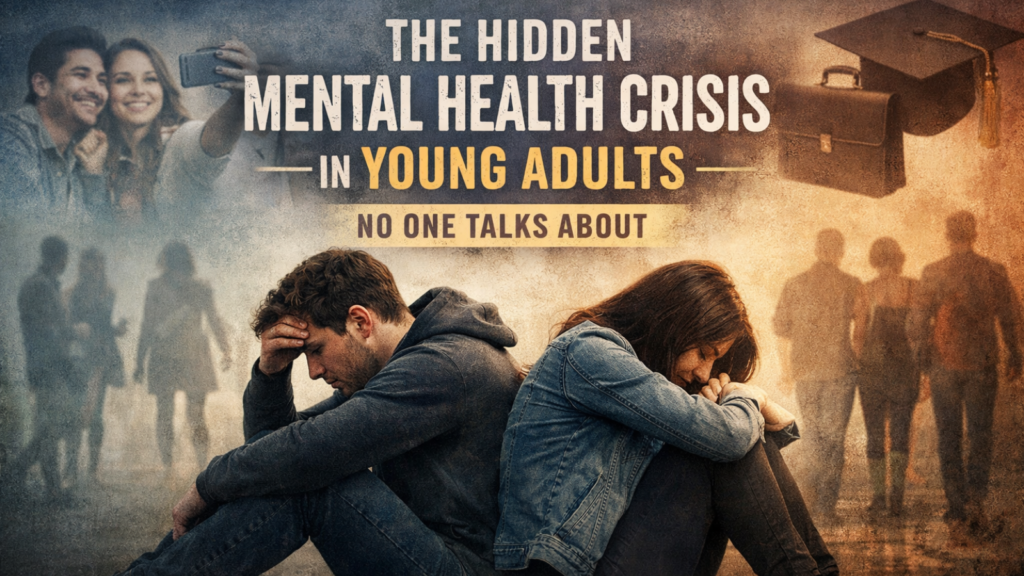
The Hidden Mental Health Crisis in Young Adults
The mental health crisis in young adults is deeper than many people realize. On the outside, life can look normal. School, work, friendships, social media, goals, and constant motion can make it seem like everything is fine. But underneath that surface, many young adults are quietly battling anxiety, depression, loneliness, burnout, and a level of emotional pressure that few people fully see.
That is what makes this conversation on Overcome with Travis White so important. Travis takes an honest look at the hidden mental health crisis in young adults and why so many struggles stay buried until they become overwhelming. This is not just about obvious breakdowns or dramatic moments. It is about the quieter pain that builds when someone feels disconnected, exhausted, isolated, or afraid to admit they are not doing well.
If you are a young adult, a parent, a mentor, or someone who cares about the next generation, this topic matters. Mental health struggles do not always announce themselves clearly. Sometimes they show up as withdrawal, irritability, loss of motivation, emotional numbness, overthinking, or the constant pressure to look okay even when life feels heavy.
What We Discussed
- Why the mental health crisis in young adults is growing faster than many people realize
- How social media, comparison, and pressure intensify hidden mental health struggles
- Why young adults anxiety and depression often stay hidden behind busy schedules and outward success
- What high-functioning depression in young adults can look like in real life
- Why so many people feel lost even when they seem to be doing everything right
- How isolation and weak connection make emotional pain heavier
- Why honest conversations, support, and early intervention matter
- How to start rebuilding when you feel mentally exhausted, disconnected, or stuck
Why the Mental Health Crisis in Young Adults Is Growing
One reason the mental health crisis in young adults feels so intense right now is that young adulthood has become emotionally crowded. It is not just the normal stress of growing up. It is the weight of expectations, constant comparison, financial uncertainty, overstimulation, and the feeling that life is supposed to come together much faster than it actually does.
Many young adults are expected to make major life decisions while still trying to understand who they are. They are told to build a future, protect their mental health, stay socially connected, make good money, and somehow enjoy the process at the same time. That kind of pressure can quietly wear people down, especially when they feel like they cannot admit how tired, anxious, or discouraged they really are.
The result is a generation that often looks functional but feels emotionally overloaded. People keep moving because they think they have to, not because they are doing well. That is part of what makes hidden mental health struggles so easy to miss.
Why the mental health crisis in young adults stays hidden
One of the hardest parts of the mental health crisis in young adults is that it is often easy to miss. A person can still show up to class, go to work, answer texts, smile in photos, and keep functioning on the surface while feeling like they are slowly falling apart inside. That is part of what makes this crisis so dangerous. People assume that if someone is still moving forward, they must be okay.
But many young adults are dealing with emotional pressure that never really turns off. They are trying to figure out identity, relationships, purpose, finances, the future, and how they are supposed to keep up with the expectations around them. Add anxiety, loneliness, depression, or unresolved pain to that, and it becomes easy to understand why so many people feel overwhelmed but do not know how to say it out loud.
For some people, the struggle stays hidden because they do not want to disappoint anyone. For others, it stays hidden because they have gotten so used to carrying the weight that they no longer know what “okay” is supposed to feel like. Pain can become normal when you live with it long enough.
The Pressure to Have Life Figured Out Early
Young adulthood is often described as a time of freedom and possibility, but for many people it also feels like a time of uncertainty and pressure. There is pressure to succeed, pressure to have a plan, pressure to be socially connected, pressure to look confident, and pressure to appear emotionally stable even when that is not what is happening internally.
That pressure can create a dangerous cycle. Someone feels overwhelmed, but instead of asking for help, they compare themselves to everyone else who seems to be doing better. Then shame gets louder. They start thinking they are weak, behind, broken, or failing. Over time, silence and self-judgment make the struggle heavier than it already was.
A lot of young adults feel like they are already late to their own life. They think they should already know their career path, have stable finances, feel confident in relationships, and be emotionally strong enough to handle everything. When that does not happen, they begin to panic. The pressure to have life figured out early can make normal uncertainty feel like personal failure.
The Hidden Cost of Looking Fine on the Outside
That same hidden pressure shows up in high-functioning depression that can look fine from the outside.
One of the most overlooked parts of this conversation is how often young adults anxiety and depression hide behind competence. Some people still get good grades. Some still go to work. Some stay active socially. Some keep joking, posting, and saying they are fine. That does not mean they are healthy. It may just mean they have gotten very good at functioning while emotionally exhausted.
This is where high-functioning depression in young adults becomes so important to talk about. A person may look responsible, motivated, and productive while privately feeling numb, disconnected, restless, or hopeless. They may be meeting expectations externally while losing themselves internally.
That is why “but they seem okay” is not a safe assumption. Someone can be keeping up appearances while quietly battling heavy mental strain. Looking fine on the outside is not the same as being okay on the inside.
Social Media vs. Reality
Social media has made the comparison problem worse because it gives people constant access to everyone else’s highlight reel. Young adults do not just compare themselves occasionally anymore. For many, comparison is built into everyday life. Every scroll becomes a reminder of who looks happier, more confident, more attractive, more successful, more certain, or more put together.
This is one reason so many young adults feel lost despite doing everything they think they are supposed to do. They may be working hard and still feel behind because they are comparing their real life to someone else’s edited life.
Why No One Is Talking About This
A hidden crisis stays hidden when people do not feel safe enough to talk about it. Many young adults have learned to keep things private because they do not want to worry other people, sound dramatic, or admit they are not doing as well as they look. Others may not even have the language for what they are feeling yet. They only know that something feels heavy, disconnected, or hard to carry.
Sometimes no one is talking about it because everyone assumes someone else will. Sometimes people stay quiet because they are afraid honesty will make things awkward. Sometimes the silence comes from stigma. But silence always has a cost. When pain stays hidden, it usually gets heavier, not smaller.
Why Young Adults Feel Lost Even When They Are Doing Everything Right
For a deeper look at direction and healing, read about how purpose supports anxiety and depression recovery.
One of the most confusing parts of mental health struggles in this stage of life is that a person can be trying hard and still feel empty. They can be responsible, disciplined, and outwardly successful and still wonder why they feel disconnected from themselves. That disconnect can make people question their purpose, their direction, and even their ability to trust their own life.
This is where identity matters. Many young adults are still trying to answer questions like: Who am I really? What do I want? What if the path I chose is not right for me? What if I keep working hard and still do not feel okay? Those questions can become especially heavy when someone already struggles with anxiety, depression, or comparison.
Feeling lost does not always mean you are doing something wrong. Sometimes it means you are in a life stage that requires more honesty, more support, and more room to slow down than you have been given.
Isolation and the Lack of Real Connection
A lot of young adults are surrounded by people but still feel deeply alone. They may have followers, group chats, classmates, coworkers, or roommates and still lack the kind of honest connection that makes them feel known. Isolation is not just being physically alone. It is feeling unseen while surrounded by activity. That kind of isolation can quietly intensify depression, anxiety, and hopelessness.
The biggest takeaway is simple: mental health struggles in young adults should not be ignored just because they are common. Anxiety, depression, emotional exhaustion, and isolation may be widespread, but that does not make them small. If anything, it makes honest support and early intervention even more important.
How to Start Rebuilding When You Feel Lost
If this topic hits close to home, the first step is not pretending it away. The first step is honesty. If you feel emotionally tired, numb, anxious, lost, or discouraged, say that clearly. Name what is real. You do not need a perfect recovery plan before you can admit that something is off.
Rebuilding often starts with a few simple moves:
- Tell one trusted person the truth about how you are actually doing
- Reduce the comparison noise that is making your mind heavier
- Pay attention to sleep, stress, and the pace you are living at
- Get real support through counseling, therapy, mentoring, or community
- Stop judging yourself for struggling and start responding to it honestly
You do not have to fix your whole life in one week. You do not need to feel inspired before you reach out. Often the strongest thing a person can do is simply stop carrying the weight alone.
Final thoughts
The hidden mental health crisis in young adults deserves serious attention because too many people are suffering quietly. Pain that stays unspoken often gets heavier. But when people feel seen, heard, and supported, things can begin to change.
Learn More
- Listen to the full podcast episode
- Visit the Overcome With Travis White homepage
- Explore more episodes and articles for honest conversations about anxiety, depression, healing, and resilience